
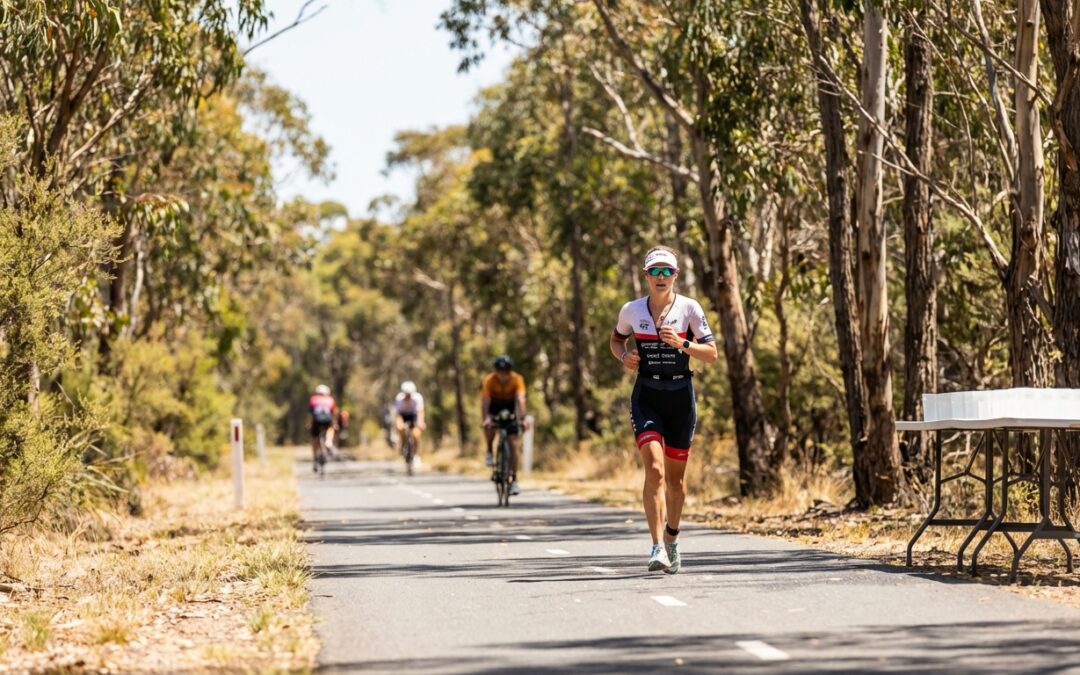
Summer training often catches people off guard. One week everything feels smooth and predictable… and the next, the same sessions feel heavier, hotter, and harder to settle into.
It’s not a motivation issue.
It’s not a fitness issue.
And it’s definitely not you “losing form.”
Instead, it’s simply your body responding to the environment — and asking for space to adapt. Once you understand that, everything changes.
Heat doesn’t have to feel chaotic or unpredictable. You can train for it deliberately, and when you do, your summer becomes calmer, safer, and far more productive.
Part 1 unpacked the science behind why heat affects performance.
Today in Part 2, we’re moving into the practical side — how to adapt without turning every session into a sufferfest.
This is your simple summer blueprint: a grounded, real-life approach to heat adaptation that fits busy schedules and typical Australian conditions.
Heat Adaptation Isn’t About Being Tough — It’s About Being Prepared
A lot of riders and triathletes assume heat adaptation “just happens” because they train in summer.
However, random hot sessions often leave people dehydrated, frustrated, and under-performing.
Heat adaptation needs:
- consistent exposure
- controlled conditions
- manageable intensity
- a little patience
The good news? Heat adaptation is one of the fastest physiological improvements you can make (Sawka et al., 2011). Most people feel the benefits within 7–14 days.
What Matters Most for Heat Adaptation (The Practical Version)
Instead of repeating the physiology from Part 1, let’s focus on the elements that actually matter in your training week — the pieces that make heat adaptation work in real life.
1. Consistency beats intensity
Heat adaptation isn’t about big, heroic sessions. It’s about showing up 5–7 times in warm conditions so your body learns the pattern and starts responding.
2. The environment matters more than the session
A simple Z1 or Z2 ride in a warm room adapts you faster than a hard workout in a cool breeze. Heat adaptation depends on environmental stress, not intensity (Sawka et al., 2011).
3. Duration doesn’t need to be long
Most benefits come from 30–60 minutes of controlled exposure. More isn’t better — it’s just hotter.
4. Recovery must match the stress
Hydration, sodium, cooling, and post-session rest are part of the training. If these slip, the benefits fade quickly. Check out my previous article on hydration.
5. You need “controlled heat,” not “maximum heat”
You don’t need 38°C. What works best is repeatable warmth that doesn’t fry your system.
6. Save high-quality training for cooler conditions
Your intervals, threshold work, hills, and crit-prep belong in the cool parts of the day. Heat sessions are for easy aerobic work.
New research supports this practical approach
A recent female-only heat acclimation study showed that simple, repeatable 60 minute sessions at moderate heart rates improved sweat rate, time trial performance in the heat, and peak power in cool conditions. This happened without changes in VO2max or red blood cell volume, which means controlled heat exposure is effective without needing extreme heat or high intensity (Normand et al., 2025). These results align with broader research showing that cardiovascular strain and sweat response are the primary drivers of heat related performance changes.
This is the solid foundation that makes heat adaptation effective.
How to Structure a Safe, Effective Heat Adaptation Block
Here’s where many people get stuck: they try to mix heat adaptation with intensity.
But intensity + heat = reduced training quality and increased fatigue (Gibson et al., 2020).
Heat adaptation works best when sessions are simple, repeatable, and low stress.
✔ Use low-intensity sessions for heat exposure
Great options include:
- Recovery and endurance zone (Z1-Z2) trainer rides with the fan turned down
- Easy outdoor rides in the warmer part of the day
- Light brick runs as temperatures rise
- Warm indoor mobility or strength sessions
✔ Prioritise controlled heat, not extreme heat
Warm rooms, mild outdoor heat, or “fan-off” trainer sessions work beautifully.
You don’t need heat waves.
✔ Keep quality training in the cooler hours
Place intervals, threshold efforts, or high-intensity sessions:
- early morning
- indoors with cooling
- or later in the day when temperatures drop
Heat sessions complement your training, not replace it.
Cooling Isn’t Cheating — It’s Smart Performance Management
Cooling helps you complete heat sessions safely and consistently — without removing the stimulus (Gibson et al., 2020).
Effective cooling strategies include:
- a cold drink before starting
- a spray bottle or mist during indoor sessions
- wetting your jersey
- partial shade outdoors
- a cold drink or slushy immediately afterwards
Cooling reduces strain and preserves training quality.
Hydration & Sodium: The Other Half of Heat Adaptation
Heat increases sweat rate — and sodium loss. Because of this, your hydration strategy needs to shift as temperatures climb.
If you missed the deeper dive, revisit it here:
👉 Think You’re Hydrated? The Surprising Truth About Sweat and Salt
In simple terms:
- replace what you lose
- avoid over-drinking
- match sodium intake to your sweat rate
- practise on training days, not race days
Hydration + heat adaptation go hand in hand.
Know When Heat Is Too Much — Red Flags Matter
Stop immediately if you notice:
- dizziness
- nausea
- goosebumps
- chills in hot weather
- rising HR with dropping power
- sudden headache
- irritability or confusion
These are signs of heat stress — and ignoring them can end your training day fast.
Heat adaptation should be safe.
Maintenance Is Surprisingly Simple
After your initial 7–14 day block, maintaining heat adaptation is easy.
You only need:
- one warm indoor session per week, or
- one easy outdoor session in warm conditions
Heat benefits fade after 7–10 days, so small weekly top-ups matter.
A Real Example — Without Overcomplicating It
Earlier this year, one of my riders felt like the heat was “beating” him. He wasn’t unfit or tired — just struggling every time the temperature climbed.
We added a handful of controlled heat sessions over two weeks. Nothing extreme. Just consistent and safe.
His next warm-weather race?
- calm pacing
- steady execution
- no heat panic
Same fitness.
Better heat tolerance.
More confidence.
That’s the difference intentional heat adaptation makes.
Your Summer Why Matters
Heat training isn’t about pushing harder — it’s about understanding your body.
What’s your summer why?
- racing stronger in warm conditions?
- feeling more confident outdoors?
- handling heat better on long rides?
- avoiding the mid-summer energy slump?
Let your why guide how you train.
Heat adaptation isn’t suffering — it’s setting yourself up to thrive.
Want a Personalised Heat Adaptation Plan?
If you’d like a simple, safe heat adaptation plan tailored to your training load, schedule, and summer events, I’d love to help.
Train smart, stay safe, and let’s make this your strongest summer yet.
Cheryl
References
Sawka MN, Leon LR, Montain SJ, et al. “Heat Acclimatization to Improve Athletic Performance in Warm–Hot Environments.” GSSI Sports Science Exchange, 2011. https://www.gssiweb.org/sports-science-exchange/article/sse-153-heat-acclimatization-to-improve-athletic-performance-in-warm-hot-environments
Gibson OR, Mee JA, Tuttle JA, et al. “Heat alleviation strategies for athletic performance.” Journal of Thermal Biology, 93, 2020.https://www.tandfonline.com/doi/full/10.1080/23328940.2019.1666624
Normand AR, et al. Home based heat acclimation improves performance in trained female endurance athletes. Journal of Applied Physiology, 2025. https://pmc.ncbi.nlm.nih.gov/articles/PMC12626771/
This site was… how do you say it? Relevant!! Finally I’ve found something that helped me.
Kudos!