
What Changes First
People often think improving in triathlon and cycling comes down to fitness.
More sessions. More volume. More intensity.
However, that is rarely the first thing that changes.
The first thing that changes is control and this is often the part that gets overlooked when improving in triathlon and cycling.
Not in a dramatic way. Not all at once. But in small, noticeable moments.
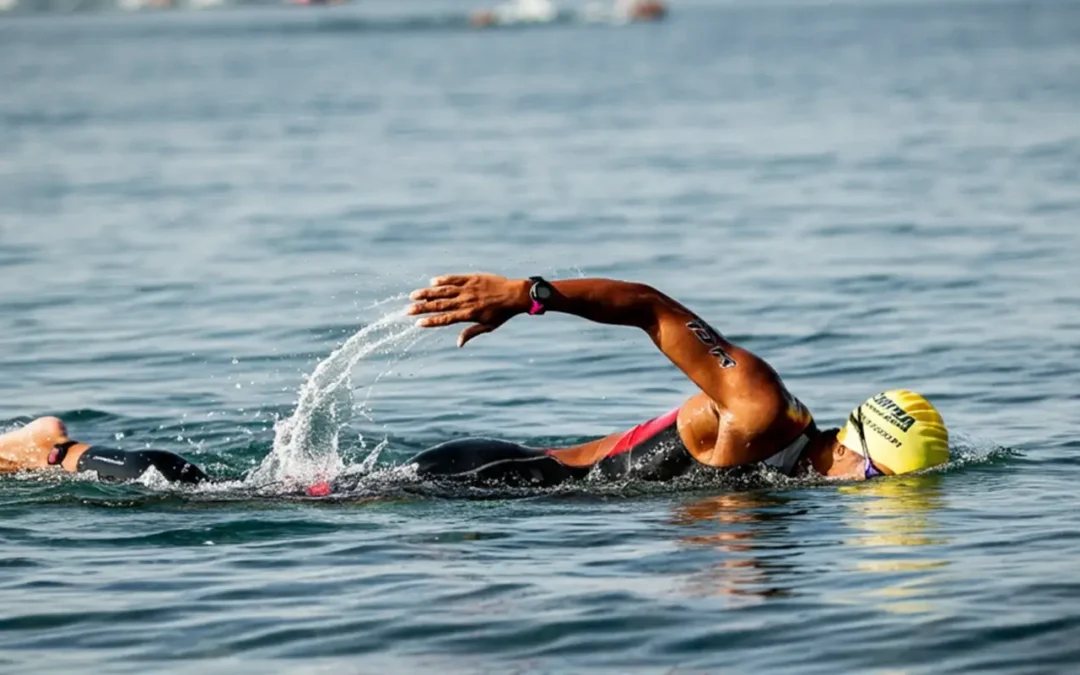
In the water, you may stop fighting it. Your breathing settles. You begin to feel where your body is rather than guessing.
On the bike, you are not just reacting to what is happening around you. You start choosing your line, your effort, your position. Things feel more predictable.
On the run, pacing becomes more consistent. You are less likely to surge early or fade late. The effort starts to match the outcome.
None of this looks like a big breakthrough from the outside.
However, it changes everything.
This is often the point where things begin to feel easier.
This is not because you are suddenly fitter.
Instead, you are using less energy to do the same work.
Research in motor learning shows that as skills improve, movement becomes more efficient and requires less conscious effort (Schmidt & Lee, 2011). In endurance sport, this efficiency plays a significant role in performance outcomes, often before measurable changes in fitness occur (Joyner & Coyle, 2008).
What you are feeling is not just progress.
It is a shift in how you are interacting with the sport.
Where People Get Stuck
This is also where many people get stuck.
Because it does not feel like “hard work” in the traditional sense.
Because of this, the instinct is often to do more.
To push harder. Add more sessions. Increase intensity. Try to stay motivated.
However, that often pulls attention away from the very thing that is improving.
Skill. Awareness. Decision-making.
The parts that make everything else work.
When this shift starts to happen, it is worth paying attention to it.
Because this is where confidence begins to build.
Not from doing more.
But from understanding what you are doing and why.
If you are unsure what your next step should look like, or feel like you are doing a lot without clear progress, I am always happy to chat it through.
References
Joyner, M. J., & Coyle, E. F. (2008). Endurance exercise performance: the physiology of champions. The Journal of Physiology.
https://physoc.onlinelibrary.wiley.com/doi/full/10.1113/jphysiol.2007.143834
Schmidt, R. A., & Lee, T. D. (2011). Motor Control and Learning: A Behavioral Emphasis. Human Kinetics.
Great post, very informative! I learned something new today. Looking forward to reading more from you. (ref:5b2f61112d90)