
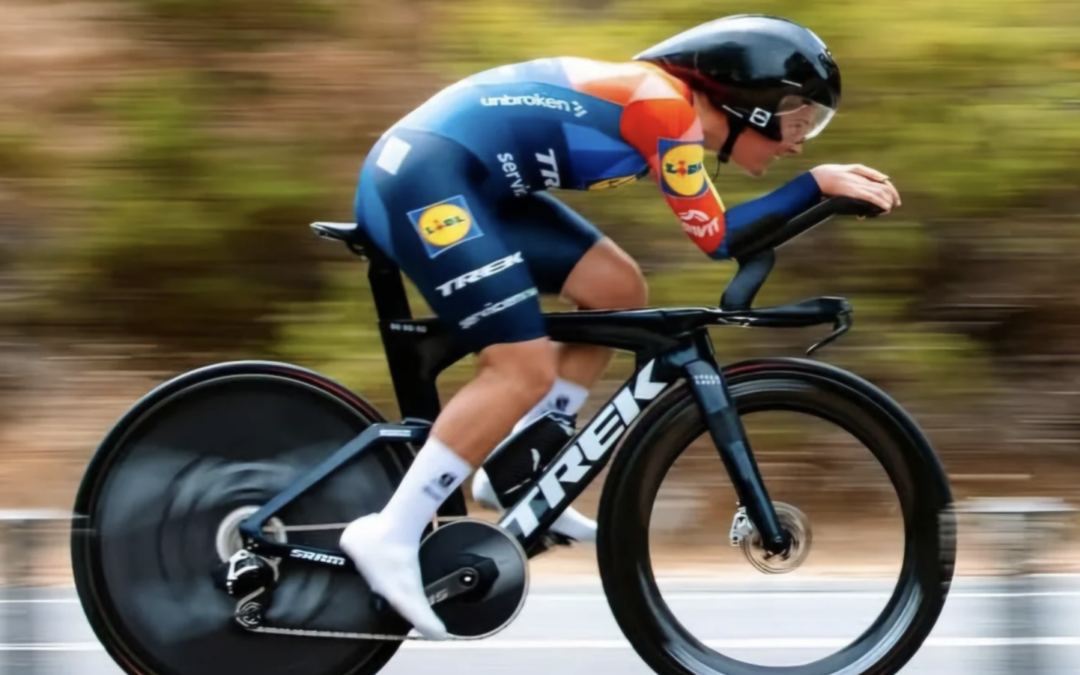
Elite cycling skills are easiest to spot when we slow down and really watch racing.
With the New Year comes the Australian Road Cycling Championships, summer triathlon racing well underway, and social feeds filled with athletes moving fast, smoothly, and decisively.
And if you watched closely, something probably stood out.
The best athletes didn’t just look strong.
They looked smooth.
Why watching racing can feel inspiring… and uncomfortable
For many people, watching elite racing brings mixed emotions.
You might catch yourself thinking:
- Why does that look so controlled?
- Why do they seem so relaxed at speed?
- Why does my riding feel harder than that — even when I’m fit?
That gap isn’t about talent.
And it’s not about motivation.
It’s about skills.
What you’re really seeing when you watch elite racing
When we watch racing — whether it’s road cycling or triathlon — it’s easy to assume performance comes down to power, fitness, or toughness.
But what’s actually on display is something quieter.
Elite athletes are demonstrating:
- Precise decision-making
- Excellent timing
- Efficient movement
- Deep trust in their fundamentals
They’re not reacting late.
They’re not panicking when speed increases.
They’re not tense through corners or overwhelmed by what’s happening around them.
That smoothness isn’t accidental.
It’s trained.
The skills that quietly separate calm from chaos
1. Braking and speed control
Elite athletes manage speed before it becomes a problem.
They brake early, smoothly, and with intention — not abruptly or in response to panic.
This single skill shapes everything that follows: line choice, control, and flow.
2. Cornering with commitment
Watch the front of any race and notice how little correction happens mid-corner.
Lines are chosen early.
Bodies stay relatively relaxed.
Movements are deliberate.
Good cornering isn’t about bravery — it’s about preparation, trust, and execution.
3. Positioning and awareness
The best riders and triathletes aren’t constantly fighting for space.
They’re reading what’s about to happen and placing themselves accordingly.
This reduces stress, conserves energy, and lowers risk — especially when things get fast or crowded.
4. Managing mental load
When skills are automatic, the brain stays calm.
When skills feel uncertain, everything feels rushed — even at lower speeds.
This is why two people with similar fitness can have completely different race or ride experiences.
Skills don’t just change how you move.
They change how you think on the bike.
Calm riding isn’t just more enjoyable — it leads to better decisions, fewer mistakes, and more consistent performance.
A smarter way to think about New Year progress
The start of a new year often brings the urge to do more.
More intensity.
More sessions.
More fitness.
But watching elite racing offers a different lesson.
The athletes who perform best aren’t doing more — they’re doing the basics exceptionally well, under pressure, when it matters.
That’s not about grinding harder.
It’s about moving better.
The bigger takeaway
Elite racing doesn’t just show us what’s possible.
It shows us what actually matters.
And more often than not, performance isn’t unlocked by pushing harder — it’s built by mastering the skills that allow everything else to work.
Want support with this?
If watching racing has highlighted gaps you’d like to close — whether that’s braking, cornering, positioning, or riding with more control under pressure — focused skills work can make a meaningful difference.
If you’d like support developing those foundations, explore my Skills Lab program or learn more about my cycling skills coaching approach.
For more information on elite racing pathways and events, you can also visit AusCycling’s official website